
How to Clean Metal Railings: The Step-by-Step Guide
If you want to keep your outdoor areas looking shiny and new all through the year, you might be wondering
Products in Stock
Lowest Prices
Express Delivery
10-Year Warranty
Bank Holiday Sale. Up To 15% Off.
If you want to keep your garden and decking in tip-top condition for spring, you might be asking yourself the question, ‘Do weeds die in the winter?’ Wintertime can be very tough on plants in the garden and can also take its toll on decking. It can be even tougher if weeds choke them off or maintain a foothold through the winter months, ready to come back with a vengeance before the plants you want to keep can emerge.
The short answer to the question is that some weeds do die off in the winter, but they will often leave seeds so that they can emerge again when the weather starts to warm up. Others may appear to die off but will remain alive through deep roots under the ground, and some can thrive even in cold and wet weather. But with a weed membrane, you can prevent weeds from establishing themselves in the first place, or from re-emerging from seeds or hidden roots.
A weed is simply a plant that appears where it is not wanted. There are lots of different kinds, but they all tend to be both hardy and persistent. Nettles, bindweed, dandelions, and chickweed are all common British garden weeds. They have different lifecycles but, like most other plants, will tend to establish themselves in the spring and thrive during the summer.
Many weeds will also enjoy the wet weather of autumn. They generally decline in the winter, but looks can be deceptive. Hardy weeds will often have deep roots that can survive even in harsh conditions. Others may indeed die back over winter, but will leave seeds for the spring, when they will once more be competing with the plants you actually want to grow.
Perennial Weeds
The term ‘perennial’ is used to describe plants that live for more than two years. This means that, unlike annuals, they will come back year after year. They will generally become dormant in winter, which could trick the unwary into thinking that they’ve died off, but will then return in the spring. Some UK perennial weeds include dandelions, creeping thistle and brambles.
Winter Annual Weeds
Annual weeds complete their lifecycle within a year – germinating, growing, flowering and dying away. They tend to leave lots of seeds though, so a new generation is likely to emerge in the spring. But do weeds grow in winter? Some annual winter weeds will actually germinate in the autumn and grow through the winter and spring, before dying off in the summer. Some examples of winter annual weeds include shepherd’s purse and purple dead nettle.
Biannual Weeds
In between the perennial and the annual is the biennial, which takes two years to complete its lifecycle. These weeds will grow from the seed in the first year and flower in the second. They tend to thrive in temperate conditions and so will die back (but not die off) in the winter. As with perennials, the roots may stay dormant, ready to come back in the spring. Examples include ragwort, giant hogweed and burdock.
Winter-Hardened Weeds
Winter weeds or winter-hardened weeds is a catch-all term for weeds that can continue to grow and even thrive in the winter. These tend to be winter annual weeds such as shepherd’s purse and purple dead nettle. Some may also be growing underground, ready to come out again in the spring.
So, do weeds die in winter? It all depends on the weed. Some species of weeds do die in cold weather, particularly annuals that have a single-year lifespan. Some biennials and perennials may die in a particularly harsh winter, but weeds tend to be hardy and durable, so will generally lie dormant and come back. Even those that do die will tend to drop seeds, meaning that new growth will be ready to come back in the spring. This may lead to them overgrowing the area and strangling off the competition – particularly the plants you actually want to cultivate.
Remove Them Before Winter
It is very difficult to get rid of weeds if the above-ground parts have died back but roots are lying dormant underground. Even weeds that die completely can leave a lot of seeds ready to germinate and re-emerge in the spring. One way of dealing with the issue is to de-weed the garden before winter. Pull the weeds out by hand or dig them out with a hoe or weeding implement – but make sure that you get all of the roots or they will just grow back.
Read our guide for how to prepare for winter for other helpful tips and tricks.
Use a Pre-Emergence Herbicide
A pre-emergence herbicide forms a chemical barrier near the top of the soil to prevent weeds from sprouting from seeds or dormant roots. It must be used at the right time, which generally means early spring for summer weeds and early autumn for winter weeds. Be careful though, because the herbicide will also affect grass and other plants that you might want to grow.
Use Weed Membrane
A weed membrane can help stop weed growth altogether while allowing the growth of the plants you do want to encourage. It works by providing a physical barrier that blocks the sunlight that plants need, preventing the weed seeds from germinating and growing. It can also affect other plants, of course, but spaces can be cut into the membrane where cultivated plants can be placed or encouraged to grow.
Getting rid of weeds once they are established can be a time-consuming and back-breaking chore. It can also be difficult to make sure that you dig up every part of the roots and leave no seeds behind that will allow the weeds to come back. It’s generally much better to prevent weeds from establishing themselves in the first place, and using a weed membrane is a great way to do this.
Dino Decking’s weed membrane is made from a heavy-duty garden control fabric that provides superior weed prevention while letting water and nutrients pass through to the soil. It’s more eco-friendly than using chemical weedkillers and provides ongoing protection. If you’re looking for a full garden refresh, check out our complete product range, including composite decking, which can really transform your outdoor spaces.
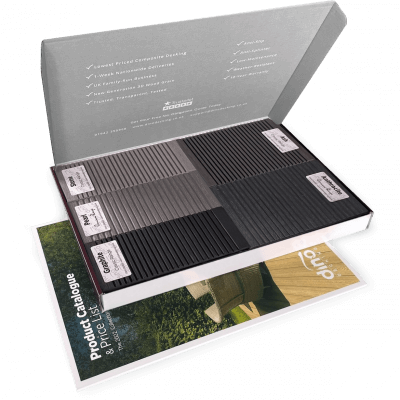
Our sample pack contains a sample piece of each colour currently available. Order your free sample pack today to compare the colours and get a true feeling of the Dino Decking range!
If you want to keep your outdoor areas looking shiny and new all through the year, you might be wondering
Having a deck can be great for entertaining or relaxing in the summer months. Composite decking has a lot of