
How to Clean Metal Railings: The Step-by-Step Guide
If you want to keep your outdoor areas looking shiny and new all through the year, you might be wondering
Products in Stock
Lowest Prices
Express Delivery
10-Year Warranty
Bank Holiday Sale. Up To 15% Off.
Picture the scene. It’s a late-summer evening and you’re enjoying being outdoors. Being in the UK, however, even summer nights can get chilly. This is when you need to know how to heat a summer house cheaply and effectively. Despite the name, a warm summer house can actually be used all throughout the year, giving you an inside haven outdoors regardless of the weather.
There are a number of different ways to keep your summer house warm. We’ll take a look at how to heat a summer house without electricity as well as some solutions that do require power. We’ll also show you how to keep a summer house warm in winter when you need plenty of heat, and how to retain warmth all year round through the use of effective insulation such as composite cladding.
Read on for the best ways to heat your summer house…
The most important and effective way of heating your summer house is simply to improve its insulation. When the day is hot, you’ll want to retain the warmth for as long as possible, and good insulation can help you keep the space comfortable long into the evening. Good insulation can also help make the most of any other heat sources you might need, especially during the colder parts of the year.
See our winter garden guide for more information.
Simple steps could include sealing potential draft points and hanging thermal curtains. Installing cladding is also a great way to drastically improve insulation whilst adding an attractive, weather-resistant shell to your summer house. One good thing about insulation is that once it’s installed, you get the benefits with no further efforts or costs. If you’re using your summer house in the winter though, you might still need some additional heating solutions.
Can you use a summer house in the winter? You certainly can if you heat it effectively. There are many ways to heat a summer house both with and without electricity and we’ll run through some of the best options below…
1. Log Burners
Log burners have become increasingly popular over recent years and a small stove can be a very effective heat source for an outbuilding such as a summer house. They can also add a very cosy feel and aesthetic similar to a fire pit.
As with fire pits, there are some safety considerations to bear in mind. Log burners should be professionally installed with a flue or chimney to remove smoke and a CO alarm. You should use only ‘ready to burn’ wood with a low moisture content. You should also be aware that the stove itself will get very hot, so prevent kids (or anyone else) from touching it.
2. Solar Panels
Using solar panels will be an eco-friendly and cost-effective option in the long run, though there will be some upfront costs installing the system. Solar power can be used to power electric heaters of various kinds. You might choose to install a dedicated system in which the collected solar power heats water in pipes that are circulated around the summer house. This can be a great way to warm the whole area but is one of the more complex solutions to set up and install.
3. Propane Heaters
A propane heater uses LPG (Liquefied Petroleum Gas), which is a liquid when stored in the tank but becomes a gas that can be burned for heat. A portable gas heater can be an effective and convenient way to heat a limited space such as a summer house, as it provides more or less instant heat and it doesn’t need to be hooked up to the gas mains.
4. Blankets & Candles
The easiest and cheapest way to keep warm in a summer house is simply to snuggle under blankets. This can also add a cosy feeling, especially if sharing the blankets with a loved one! Candles can also add warmth and extra ambience, as well as a nice smell if using scented candles. This can be ideal if you just need to be a little more toasty at the end of a summer day.
5. Electric Radiators
Electric radiators can be a good option for a summer house and you can choose from a wide variety of fixed or portable models. Both offer convenience in different ways. Fixed radiators are ready for use all the time, while portable units can be deployed when you need them and stored away when you don’t. Electric radiators tend to be good for filling the summer house with a constant, steady warmth rather than providing a quick blast of heat.
6. Electric Fan Heaters
Electric fan heaters, on the other hand, can be a great way to get a quick blast of warmth when you need it. The fan will also circulate the heat around the summer house, meaning that the heat is less localised than some other solutions such as gas heaters or radiators. As an added bonus, many fan heaters have a cool setting where the fan works without the heating element. This can be ideal for cooling your summer house on a hot summer day.
7. Underfloor Heating
Underfloor heating offers a wonderfully effective and space-saving option. It can provide constant heat throughout the structure, but it can take a little while to warm up, so it’s best to switch it on in advance. Once it does though, you can have a toasty warm space with an unobtrusive heating solution. Underfloor heating can be relatively expensive and quite involved to install though, and accessing the system if anything goes wrong can also be tricky.
8. Halogen Heaters
A halogen heater is a type of electric space heater that produces heat using a halogen-filled bulb. It’s great for producing instant heat when you need it and tends to be cost-effective and energy-efficient. Portable halogen heaters are also handy as they can be brought out when needed and stored away when not in use. A halogen heater tends to be good for targeted heat if you are close to it, but is not as good as some other heating solutions at warming the entire space.
There are plenty of ways to heat your summer house all year long, but insulating it effectively is an excellent way to retain the heat from the day and make the best of any other heating solutions you choose. One of the best ways of improving insulation is to add cladding to the outside of the structure.
Dino Decking’s composite cladding is eco-friendly, affordable and long lasting. Also, once it has been installed, it requires minimal effort and maintenance to keep a summer house warm, protected, and looking great.
Take a look at our composite cladding range today and see if it’s the right choice for your garden.
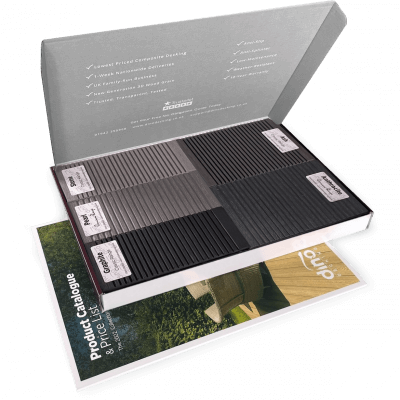
Our sample pack contains a sample piece of each colour currently available. Order your free sample pack today to compare the colours and get a true feeling of the Dino Decking range!
If you want to keep your outdoor areas looking shiny and new all through the year, you might be wondering
Having a deck can be great for entertaining or relaxing in the summer months. Composite decking has a lot of