
How to Clean Metal Railings: The Step-by-Step Guide
If you want to keep your outdoor areas looking shiny and new all through the year, you might be wondering
Products in Stock
Lowest Prices
Express Delivery
10-Year Warranty
Bank Holiday Sale. Up To 15% Off.
If you’ve spent time, money and effort installing a beautiful composite deck, our outdoor heating ideas can help you enjoy it all year round. Many people let their composite decking sit unused during the winter months, but there’s no need to let your outdoor space go to waste when you can easily bring a bit of warmth with a range of outdoor heating options. It’s also worth noting that these will also work with other types of decking and decking-free gardens. However, you should always bear in mind safety considerations when deciding on outdoor heating solutions – especially around wooden decking and furniture.
Using outdoor heating can help you get the most out of your outdoor spaces and enjoy your decking right through the year. These spaces often go unused in the winter, but heating options can take the edge off a spring or autumn night, or create a wonderful ambience for socialising late into a summer evening.
A firepit is simply a container or space designed to contain a fire that you can sit around, look at, enjoy the warmth of, or even cook on. It can stand on the decking or other surface, or may be sunken, recessed or safely incorporated into the design of a deck. Most firepits are designed for you to make a fire from wood or other suitable materials, but you can also get gas-fired firepits for more control and less mess.
Firepits can be great for socialising as they offer a warming glow and an attractive focal point, as well as that irresistible bonfire smell. If you’re not so keen on the wood smoke aroma, some modern firepits also offer a ‘smokeless’ design with a double-wall construction and optimised airflows.
Halogen heaters can be a very practical outdoor heating solution as they produce very quick heat at the flick of a switch. They use electricity to heat a filament in a tube or bulb filled with halogen gas. They are convenient, energy efficient and provide an eco-friendly outdoor heating option.
Halogen heaters are great for instant heat, and the short-wave infrared radiation is not dispersed by wind or air movements. However, they aren’t quite so good for heating large areas. People and objects not in the path and immediate vicinity will not get much benefit, so multiple heaters may be required for larger gatherings.
Chimineas originated in Mexico and their name comes from the Spanish word for ‘chimney’. They consist of a round or bulbous area for fuel and fire, with a vertical chimney to take the smoke up and away. They are generally free-standing on a separate frame with legs.
The fire is built in the ‘belly’ of the chimney, so it is only exposed through the opening at the front. This means that you don’t get the 360-degree flaming aesthetic of an open fire pit. However, it also means that it is not as affected by the weather. The clay or metal bodies are also great at retaining and radiating heat – though you do need to keep children away and refrain from touching it yourself.
Infrared heaters use electromagnetic waves to warm people and objects directly rather than heating the air itself. This is similar to the way that the sun gives out heat and can be a great option for outdoor heating.
Mounting an infrared heater on a suitable wall enhances safety as it is stable and out of the way. It can help you save floor space and also means that you have a permanent and consistent outdoor heating solution whenever you need it. You should make sure that any model you install is suitable for outdoor heating, however.
You might not think of a pizza oven as an outdoor heating solution. This might not be their primary use, but they can do the job very well. Traditional pizza ovens are designed to generate consistent heat to cook the pizza evenly. They are very good at generating and retaining heat, which will also radiate very consistently into the surrounding air. Much like an indoor storage heater, they will continue to generate heat from the bricks or other materials even after the fire has died. And, of course, you can also use them to cook delicious pizzas!
An outdoor fireplace is a permanent structure specifically designed for holding a fire outdoors. Installing one can be a significant project and you need to have a suitable space for it, but it can be a marvellous outdoor heating option.
For a start, they look great, with an aesthetic appeal sitting somewhere between the intimacy of an indoor lounge and an eye-catching outdoor focal point. They’re perfect for socialising around, built-in chimneys can provide effective smoke control, and they can even boost the value of your property.
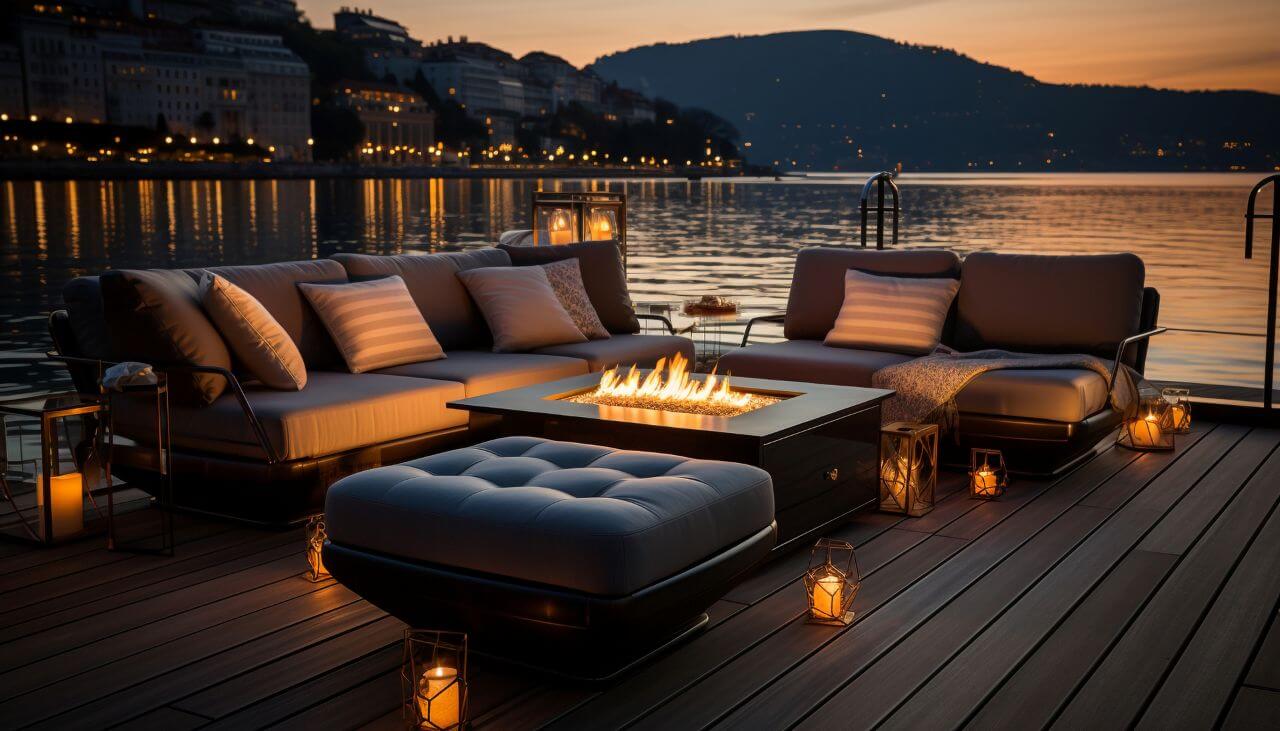
A fire pit table is the ultimate option for entertaining. As the name implies, it’s a piece of outdoor furniture that combines a firepit and a patio table. There are a number of different designs, but generally they have the firepit part in the centre, with the table extending around it. Some have small open flames, while others are enclosed behind a fireproof see-through barrier. Most are gas-fuelled, though there are some wood-burning options. Fire pit tables offer warmth and light without the mess and smoke, a surface for dining or drinks, and a definite sense of luxury!
Outdoor gas heaters use gas-powered flame to produce radiant heat. They are portable and utilise gas bottles, such as propane. This can be convenient, meaning that they can be easily put out and stored away, or left out for periods of time. It also means that they don’t need an outdoor power source or cables trailing back into the house.
Gas heaters can emit a lot of heat, making them effective for larger areas. They can also produce heat quickly, but they can be less energy efficient than electric outdoor heating options.
An electric heater uses electricity to produce infrared energy, which directly warms people and objects rather than heating the air around it. As with halogen and wall-mounted infrared heaters, this is essentially the same process as warming from the sun. There are a wide range of electrical heater styles available. Most are free-standing units that can be moved to where they are needed. They offer high energy efficiency, instant and silent operation, and precise control. One drawback is that they are not very good at warming whole areas or people who are not in the path of the heat.
A hanging heater is designed to be suspended from a ceiling, gazebo or pergola to provide warmth to the area below. They are usually electric, so they will need an outdoor power source or will need to be connected to an outlet in the home via an extension cable. The discrete location means that it is safely out of the way, and it can be a good way to radiate heat to an entire area. You do need an appropriate structure to hang it from, though they can be surprisingly lightweight.
While a hot tub is not a traditional form of outdoor heating, it’s a great way to stay warm and enjoy a bit of luxury in your garden or decking area. Hot tubs are self-contained tubs filled with water that is heated for relaxation, pleasure or hydrotherapy. They also circulate the water with jets, streams and bubbles, which can be very soothing and relaxing. They don’t radiate much heat to the surrounding areas, but the occupants can stay as warm as they like in the water, regardless of the temperature outside!
Insulating enclosures are essentially enclosed structures that are protected from the elements and provide a snug and cosy place to sit, relax or work. They can be somewhere between a shed and a garden room, and while they don’t have separate heating elements in and of themselves, they can be heated with other heating solutions or just used as they are. Insulating materials help retain the heat and keep out draughts, and they can be an energy-efficient way of keeping warm in your outdoor spaces.
The simplest, most eco-friendly and cost-effective way of staying warm on your deck or in your garden is simply to wrap up warm! Choose warm fabrics and use layers to keep the heat in and you can still enjoy your garden in all but the wettest and coldest of weather. There’s also something physically comforting about hunkering down under blankets when it’s cold outside.
Composite decking is designed to be extra durable and weather resistant, meaning that it is there to be enjoyed all year round. It can also be a great place for winter evenings as it doesn’t get muddy like a lawn and is slip resistant when it does get wet.
Our Premium Decking is treated with a special coating for even more protection and comes in a range of stunning finishes, including Anthracite, Walnut, Pearl and more. Take a look at our full range of composite decking and contact us if you need any more help, advice and information.
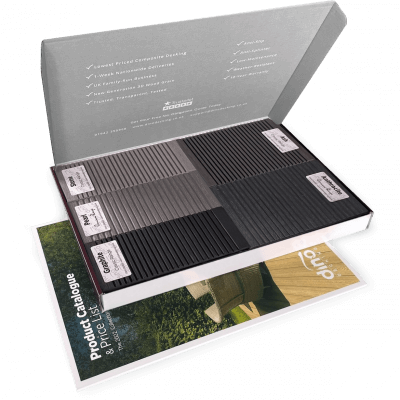
Our sample pack contains a sample piece of each colour currently available. Order your free sample pack today to compare the colours and get a true feeling of the Dino Decking range!
If you want to keep your outdoor areas looking shiny and new all through the year, you might be wondering
Having a deck can be great for entertaining or relaxing in the summer months. Composite decking has a lot of