
How to Clean Metal Railings: The Step-by-Step Guide
If you want to keep your outdoor areas looking shiny and new all through the year, you might be wondering
Products in Stock
Lowest Prices
Express Delivery
10-Year Warranty
Bank Holiday Sale. Up To 15% Off.

When you’re considering options for your outdoor space, you may be weighing up the pros and cons of all the best decking materials. PVC decking, also known as vinyl decking, is one popular choice. However, before you make a decision, it’s important to be aware of some common problems with PVC decking. In this post, we’ll take an honest look at the potential drawbacks of PVC, the comparison of composite decking vs PVC, and the potential alternatives you could use instead of PVC to help you determine if PVC decking is the right fit for your garden.
One of the first problems you’ll likely notice when researching PVC decking is the price tag. Compared to traditional wood decking, PVC tends to have a higher upfront cost. While some argue that the longevity and low maintenance requirements of PVC make up for this over time, the initial investment can be a barrier for many homeowners working with a tight budget.
Also read: Six Small Garden Decking Ideas on a Budget
Although PVC decking is marketed as very durable, with 50 years average life expectancy and fade-resistance, the reality is that constant exposure to UV rays can take a toll. Over time, you may notice your pristine white or richly coloured PVC boards start to look a bit lacklustre. Whilst this is certainly a problem with PVC decking, it’s also unfortunately a problem with any type of decking you could buy. UV fading is a natural occurrence that all decking will go through eventually, and it doesn’t mean your deck looks any worse. But whilst fading isn’t much of a problem, certain PVC decking can also be prone to staining from spills, dirt, and debris which can affect the look of your deck.
PVC is a relatively soft material, which means it can be more prone to surface scratches and dents compared to harder woods or composite decking. If you have an active family, are building a deck with your pets in mind, or plan to regularly move furniture around on your deck, those marks can quickly accumulate and detract from the overall appearance.
Another problem with PVC decking is its temperature regulation. UK weather can be unpredictable, with fluctuating temperatures throughout the year. PVC decking is especially susceptible to expanding in the heat and contracting in the cold. This constant movement can cause big problems as it leads to warping, buckling, or gaps forming between the boards over time, compromising the stability and aesthetics of your deck.
If you’re used to the sure footing of a wood deck, PVC might come as a surprise. When wet from rain or morning dew, PVC decking can become quite slick, posing a potential safety hazard which is a big problem if you have young children or elderly family members using your outdoor space. This is definitely something to keep in mind when deciding on PVC decking.
As homeowners become increasingly eco-conscious, the sustainability of building materials is an important factor. Unfortunately, this highlights another problem with PVC decking.. The manufacturing process for PVC involves the use of fossil fuels and the release of harmful toxins, making it unsustainable. Additionally, the enhanced durability of PVC means that boards will likely end up in landfill once they’re no longer usable, contributing to pollution.
Following on from the previous point, another problem with PVC decking is it’s notoriously difficult to recycle. Many recycling centres simply don’t accept PVC building materials. So even if you’re committed to responsible disposal at the end of your deck’s lifespan, there may be limited options available.
If you’re looking for more eco-friendly materials, check out our guide on the different types of sustainable decking.
While PVC decking is often touted as being low maintenance, the flipside is that a DIY deck repair can be tricky to do when damage does occur. Unlike wood, which can be sanded and refinished, PVC that is scratched, dented, or stained often needs to be completely replaced. Depending on the age of your deck, it can also be challenging to find boards that are an exact match to seamlessly blend in repairs, unlike repairing composite decking.
To keep PVC decking looking its best, regular cleaning is essential. However, you can’t just scrub it down with any old brush and detergent. The problem with PVC decking is that PVC manufacturers often recommend specific cleaners and techniques to avoid damaging the surface. This means potentially investing even more money in special products and spending more time and effort being extra cautious with your cleaning routine.
If you’re looking for a low-maintenance option that offers better durability and slip resistance than PVC, composite decking is worth considering.
Made from a blend of wood fibres and recycled plastics, composite boards provide the natural look of wood without the hassle and there are multiple varieties to consider. You can order high quality composite decking in the UK from us at Dino Decking for a convenient solution – we’ll even send you a free sample first, free of charge.
Of course, there’s always the classic choice of natural wood decking. There are a huge variety of wood types for outdoor decking, and while they do require more upkeep in terms of staining and sealing, many homeowners feel it’s worth it for the timeless beauty and renewability of real wood. Sustainably sourced options like FSC-certified lumber are also available. For a further look at composite vs wood decking, check out our helpful guide.
Ultimately, deciding on a decking material comes down to your individual priorities and circumstances. If you’re willing to pay a bit more upfront for a deck that’s very low maintenance and aren’t too concerned about sustainability or slip resistance, PVC could still be a contender.
There are some scenarios where PVC decking might be the most practical option. For instance, if you have a pool deck or live in an area that experiences a lot of wet weather, you may appreciate a non-slip decking like PVC that dries quickly and resists mould and mildew growth more readily than wood. For a further look at PVC vs composite decking, check out our helpful guide.
We hope this overview of potential problems with PVC decking has given you a more complete picture to guide your decision making. Remember, your deck is an extension of your home and a space for making memories with loved ones. Taking the time to carefully weigh the pros and cons of composite decking as well as different alternatives can help ensure you end up with a deck that serves your family well for years to come.
Still unsure about what decking to choose? Try our free sample pack to test out if composite decking is right for you, or contact our specialist team for more help and get your perfect decking material today.
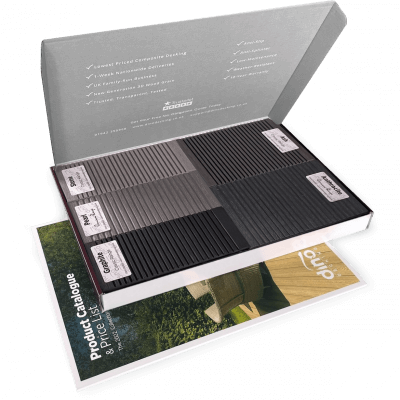
Our sample pack contains a sample piece of each colour currently available. Order your free sample pack today to compare the colours and get a true feeling of the Dino Decking range!
If you want to keep your outdoor areas looking shiny and new all through the year, you might be wondering
Having a deck can be great for entertaining or relaxing in the summer months. Composite decking has a lot of