

10 Unique Shed Cladding Ideas
Sheds have been a staple of gardens and backyards for ages. Over time, they have transitioned from simple tool storage
Products in Stock
Lowest Prices
Express Delivery
10-Year Warranty
October Sale. Up To 15% Off.
A garden trellis can add a touch of elegance and vertical interest to any garden, but it’s the climbing plants that truly bring it to life. Whether you’re looking to create a secluded retreat, add a splash of colour, or simply enhance your garden’s aesthetic appeal, the right climbing plant can transform your trellis into a stunning focal point.
Here are the 11 best climbing plants for your trellis:
Let’s be honest, a bare trellis can look a bit, well, bare! The best climbing plants for a trellis provide lush greenery and vibrant colours, softening the hard lines of the structure and creating a more inviting and visually appealing space. Imagine a cascade of fragrant roses or a vibrant tapestry of clematis adorning your trellis – it’s an instant garden upgrade.
Beyond their beauty, the best climbing plants offer several practical benefits when paired with a trellis. They can create privacy screens, shield you from the wind, and even help to regulate the temperature of your home by providing shade. If you’re looking for ways to make your garden more functional and sustainable, a trellis with climbing plants is a fantastic option.
For many climbing plants, a trellis provides essential support, allowing them to reach their full potential. It promotes better air circulation, which helps prevent diseases, and exposes the foliage to more sunlight, encouraging vigorous growth and abundant flowering.
If you’re looking for more trellis ideas for inspiration, make sure to check out our blog.
Before you fall in love with a particular climber, consider your local climate. Some plants thrive in sunny conditions, while others prefer shade. Likewise, certain varieties are more tolerant of cold temperatures or coastal environments. The best plants for your trellis will be the ones that flourish in your garden, so do your research to ensure your chosen plant won’t pack it in before it blooms.
Climbing plants vary significantly in their growth rate and ultimate height. If you’re after quick coverage of your trellis, opt for a vigorous grower like ivy. However, if space is limited, a more compact climber like clematis might be a better choice. Always check the plant’s mature size to avoid overcrowding your trellis.
Consider how much time and effort you’re willing to invest in maintaining your climbing plants. Some, like honeysuckle, require regular pruning to keep them in check, while others are relatively low-maintenance. Think about your lifestyle and choose plants that suit your gardening habits.
If you’re looking for some low maintenance garden ideas, check out our other blog.
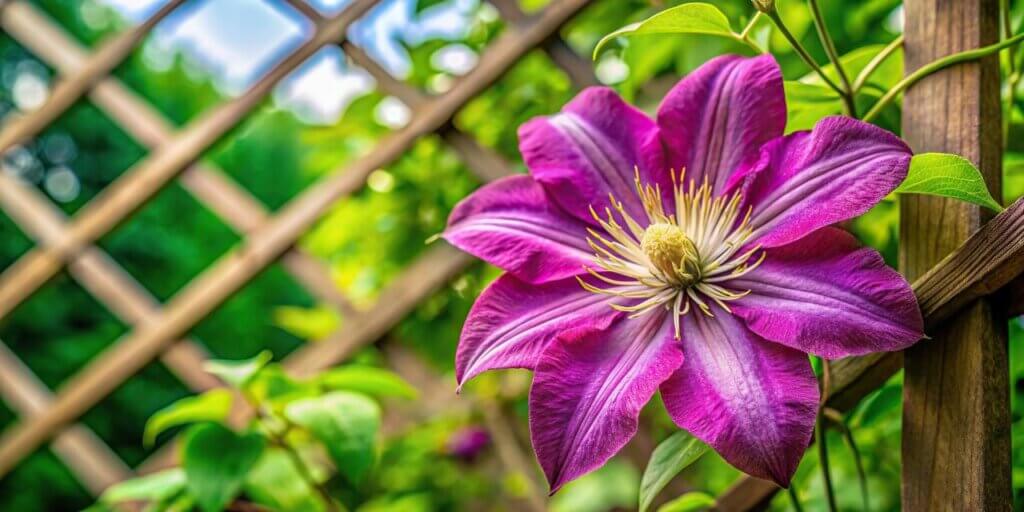
Clematis is a twining climber plant, favourite among gardeners for its stunning, large blooms in a wide array of colours. From deep purples and vibrant reds to delicate pinks and pristine whites, there’s a clematis to suit every taste. They’re also relatively easy to care for and can thrive in a variety of conditions due to their hardy nature, making them a versatile choice for any trellis.
If you’re looking for a twining climber with intoxicating fragrance, look no further than jasmine. Its delicate white flowers release a sweet perfume that will fill your garden with a delightful aroma and, for such a delicate looking plant, it’s quite hardy too, allowing it to last the cold UK winters. Jasmine is a vigorous grower, making it ideal for covering walls and fences.
Another fragrant favourite, honeysuckle is known for its beautiful flowers and sweet nectar. It is a twining climber that attracts pollinators like bees and butterflies, adding life and movement to your garden. Honeysuckle is also very hardy and a vigorous climber that can quickly cover a trellis, creating a lush and romantic atmosphere.
Ivy is a classic choice for trellises, offering year-round greenery and a touch of timeless elegance. It uses a self-clinging mechanism to stay on the trellis and it’s incredibly hardy, thriving in both sun and shade, and being able to tolerate a range of soil conditions. Plus, it’s a low-maintenance option for busy gardeners.
Wisteria is a showstopper with its cascading clusters of fragrant flowers in shades of purple, pink, or white. It’s a hardy and vigorous twining climber that can reach impressive heights, making it perfect for large trellises and pergolas. While it requires some patience to establish, the breathtaking floral display is well worth the wait.
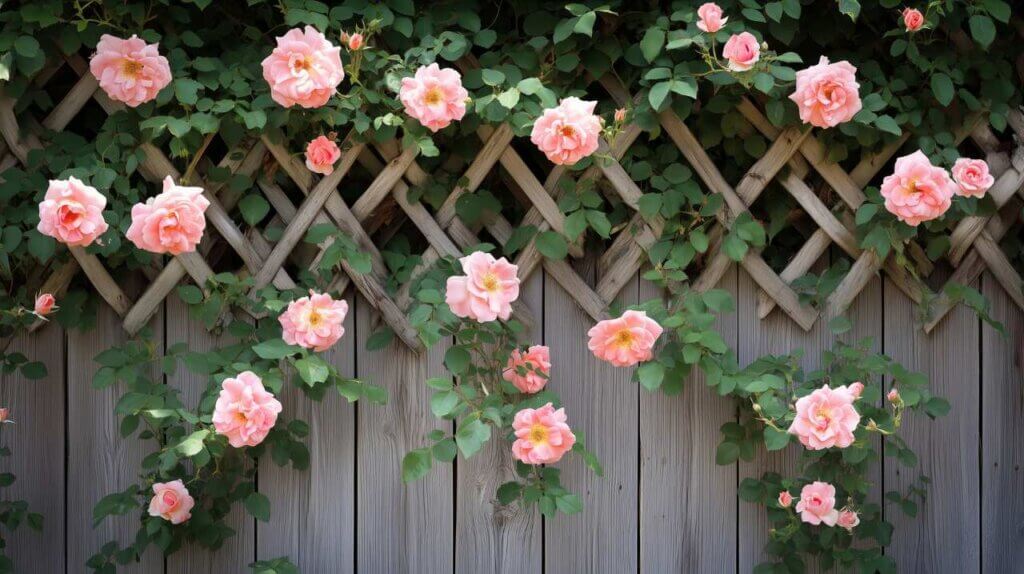
Climbing roses add a touch of romance and classic beauty to any garden. With their abundance of fragrant blooms, they create a stunning visual display. They actually have no climbing mechanism and are a type of wall shrub that requires support, like a trellis, to grow up and around. There are countless varieties to choose from, most of them very hardy, offering a wide range of colours and growth habits – just remember that climbing roses generally prefer a sunny location and well-drained soil.
For a truly exotic touch, consider bougainvillea. This vibrant scrambling climber boasts colourful bracts in shades of pink, purple, red, and orange. Whilst it is half-hardy and can deal with a little frost in the UK winter, it thrives in warm climates and requires plenty of sunshine. Bougainvillea can be a bit more demanding in terms of care, but its spectacular display makes it a rewarding choice.
If you’re looking for something more extraordinary in the UK landscape, Passion Flowers are a beautiful and unique climbing vine that uses tendrils to crawl up a trellis and sports an intricate purple flower in bloom. They are generally very hardy, said to be calming, and some can even bear fruit.
Similar to a common Jasmine, the Star Jasmine is a popular twining climber, known for its white star-shaped flowers that give off an intoxicating smell. Whilst not as durable as the common Jasmine, being only half-hardy, the Star Jasmine can still withstand temperatures of up to -10ºC but can be damaged by hard frost or winds.
Another beautiful flower to have growing on your trellis is the Sweet Pea. With climbing tendrils and gorgeous purple and pink flowers, the Sweet Pea can cover your trellis in no time at all and give your garden a unique beauty. Whilst they are quite hardy, they will need protection from hard frost, being able to withstand only around -5ºC. The Sweet Pea also symbolises friendship and gratitude, making it a lovely plant to grow.
A Virginia Creeper is a fast-growing vine that uses sticky tendrils to climb. Known for its brilliant red and orange hue in Autumn, the Virginia Creeper is extremely hardy, being able to tolerate cold down to -20ºC and lower. This makes it perfect for those winter months in the UK, allowing your garden to have a beautiful colour all year round without your constant maintenance. In fact, the only maintenance you’ll have to do is ensuring it doesn’t spread too much, as this climber is especially fast-growing!
Looks and maintenance aren’t everything when it comes to climbing plants. You also need to know if your garden has the right conditions to let your climbing plants really grow and shine. After all, nobody wants to see a dull, lifeless plant on your trellis. So let’s go through the different growing conditions for all those beautiful climbing plants.
If your garden is cast in shadow a lot of the time from high fences or obstructions, you might consider getting Ivy. Ivy loves shade, and will grow very quickly across your trellis whilst giving a wild yet regal look to your garden. If Ivy isn’t your style, don’t worry. Clematis, Honeysuckle, and Virginia Creepers also don’t mind the shade.
Most of the climbing plants we’ve talked about are fast climbers, with Ivy, Wisteria, and Virginia Creepers being especially vigorous, so you can quickly fill up that trellis with beautiful blooming flowers. Just be careful they don’t grow too much, otherwise you might have less of a wild aesthetic and more of an overgrown one. If you don’t want the stress of a fast-grower, you can opt for Climbing Roses or Bougainvillea and watch their beauty grow slowly over time.
These are the climbers you’ll be enjoying all year round, making them a good investment for your garden. Ivy and Star Jasmine tend to be the best evergreen climbers, with some species of Clematis, Honeysuckle, and Passion Flower withstanding harsh winters. A good idea would be to have a mix of deciduous and evergreen plants, so you still have some greenery in the winter.
Talking of winter, if you want to mix things up and have a plant that blooms in winter look no further than a Clematis or a Winter Jasmine. These gorgeous plants will add a splash of colour to your snowy winter wonderland in the best way possible and are always a good option to have in your garden.
When planting your chosen climber, position it at a suitable distance from the trellis to allow for root development. Water it well and add a layer of mulch to help retain moisture. And if you’ve chosen a high quality composite garden trellis, you can be confident it will provide the sturdy support your plants need to thrive.
As your climbing plant grows, you’ll need to guide and secure the vines to the trellis. Use soft ties like garden twine or fabric strips to avoid damaging the stems. Gently tie the vines to the trellis supports, encouraging them to grow in the desired direction.
Regular pruning will help maintain the shape and health of your climbing plants. Remove any dead or damaged stems and trim back excess growth to prevent overcrowding. This will also encourage better air circulation and promote more abundant flowering.
Whilst some climbing plants are very hardy and don’t need a lot of maintenance, it’s always good to double check your plants’ requirements and get them a little water now and then to keep them fresh and vibrant.
Choosing the right climbing plants for your trellis can not only transform your garden into a haven of beauty and functionality but shelter your home and provide an extra layer of insulation. Whether you opt for the vibrant hues of clematis, the intoxicating fragrance of jasmine, or the classic elegance of ivy, you’re sure to create a space that brings you joy for years to come.
And if you’re unsure which climbing plant is best suited to your needs, why not consult our comprehensive trellis guide? It’s packed with helpful advice and inspiration to help you make the perfect choice.

Our sample pack contains a sample piece of each colour currently available. Order your free sample pack today to compare the colours and get a true feeling of the Dino Decking range!
Sheds have been a staple of gardens and backyards for ages. Over time, they have transitioned from simple tool storage

We all know that sustainability is important to reduce damage to the environment, but sometimes we don’t realise that there