
How to Clean Metal Railings: The Step-by-Step Guide
If you want to keep your outdoor areas looking shiny and new all through the year, you might be wondering
Products in Stock
Lowest Prices
Express Delivery
10-Year Warranty
Bank Holiday Sale. Up To 15% Off.
Having a deck can be great for entertaining or relaxing in the summer months. Composite decking has a lot of benefits over alternatives such as timber. It’s tough and durable and resistant to rain, rot and warping. It looks beautiful and comes in a range of vibrant colours, but you might be wondering, does composite decking get hot in the sun?
The short answer is that composite decking can get hot, especially if it’s exposed to direct sunshine, but so can other materials. In this article, we’ll look at how composite decking compares to other materials in terms of heat, as well as a few ways to keep your decking cool in the sun.
Composite decking, like any other kind of material used outside – from timber to concrete and plastic – has the capacity to get hot, especially when exposed to direct sunlight. There are a number of different types of composite decking though, and the design can have an impact on heat retention.
Composite material tends to be quite dense, which makes it retain more heat, but hollow rather than solid decking will tend to stay cooler, as well as being lighter and more manageable. Dino Decking’s composite decking has hollow channels running through the inside. It is still tough and durable, but this hollow construction also helps it to disperse heat, so it does not get quite so hot in sunlight.
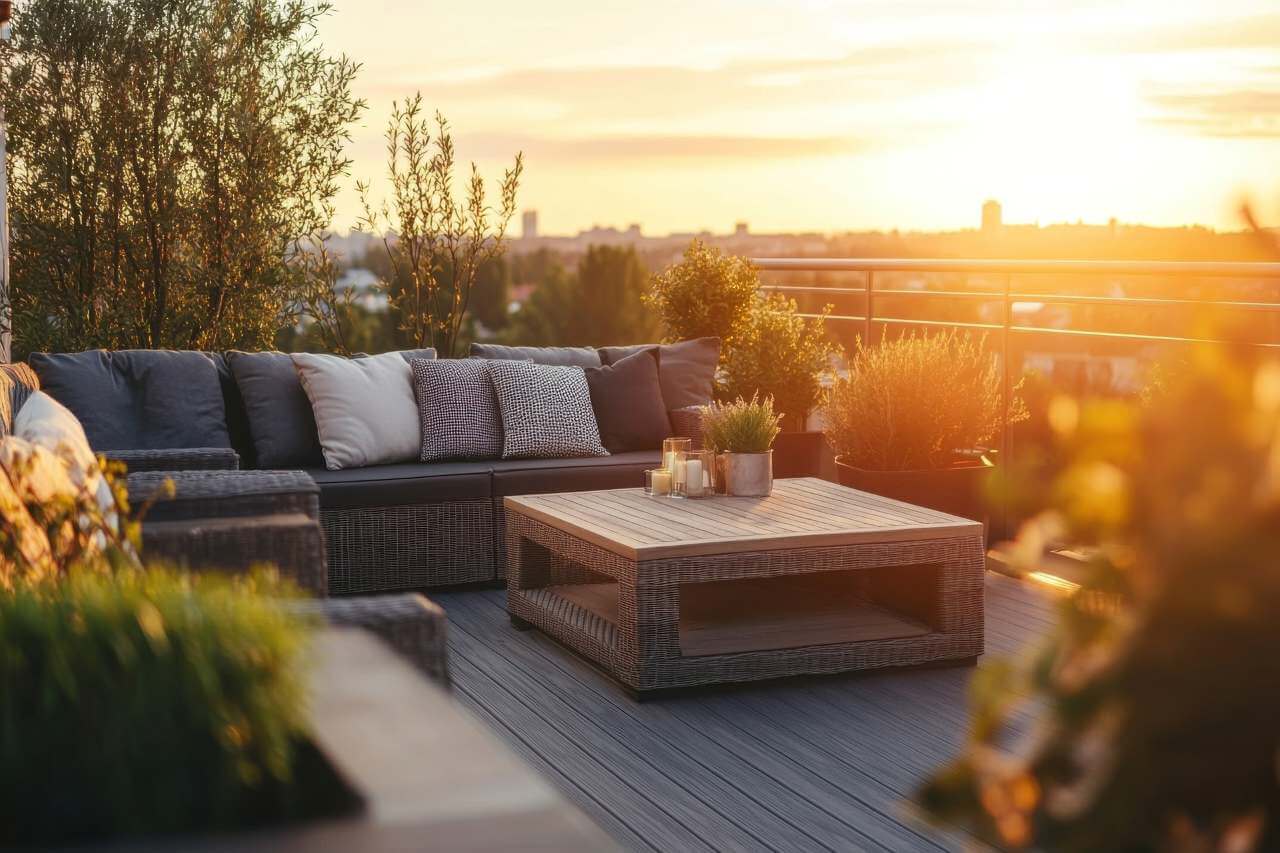
So, how hot does composite decking get, and does composite decking get hotter than wood?
Composite decking does generally retain more heat than traditional timber decking due to the density of the material, but other decking materials, including plastic and aluminium, can get even hotter.
There are also a number of other factors that can affect how hot different types of decking can get in warm weather and direct sunlight. Firstly, as already mentioned, Dino Decking’s composite decking uses a partially hollow design. The composite material itself is so strong and is built to such a sturdy construction that this does not cause any kind of structural weakness. It does make it lighter, cheaper and more effective at dispersing heat.
The colours of the decking can also have a bearing, as lighter colours are more effective at reflecting heat, while darker colours absorb it. In many cases, a modern, hollow composite material may be better at dispersing heat than solid timber, especially in lighter colours.
There are other reasons why composite may be one of the best materials for your decking. When it comes to composite vs timber, composite is far more durable, is resistant to water, rot and warping, and is easier to maintain.
Composite decking can indeed get hot, and there are a number of reasons why you might find your composite decking hot in sun-exposed locations. Any material can get hot in the sun, but some contributory factors could include the following:
Black composite decking can look extremely striking and stylish, but you should be aware that darker colours absorb more light and heat from the sun. For this reason, you might want to ensure that any darker colours have access to shade, or choose a lighter colour to begin with.
White composite decking can be fantastic for reflecting light and staying cooler, and is another bold choice for certain colour schemes. It doesn’t fit every garden theme though, and there are other popular decking colours in lighter shades, such as sage green or light grey.
All Dino Decking’s composite decking boards are tough and water-resistant, but our capped composite decking is even more durable. This is because it features an additional outer layer of polymer coating to provide additional protection. This protects not only against moisture and physical damage such as scratches, but also UV rays from the sunshine. It can help prevent fading over time and may also reflect some of the UV rays that can cause the decking to heat up.
Choices such as our premium anthracite decking look great and offer superior protection regardless of the weather conditions.
Decking boards can come in solid and hollow designs. Solid boards are stronger but heavier and, as there is more of the material present, they also have a tendency to retain and store more heat.
Dino Decking’s composite boards are engineered with hollow sections or passages running along their lengths. This makes them lighter and easier to install, while still retaining all the durability you need via the strength of the material and the structural design. The hollow design provides interior airflow, which regulates heat and helps it dissipate faster.
There are a number of things you can do to help keep your decking cool when the weather is hot. These include the following.
As already mentioned, lighter colours can reflect light and absorb less heat than darker shades. This means that lighter-coloured decking boards will remain cooler over time – though even black and other dark shades will retain some heat, especially if exposed to strong direct sunlight.
You might want to consider shade when first planning a deck, ensuring that you have at least some sections that are shaded at different times of the day from the house, outbuildings, fences, trees and other permanent sources of shade.
For existing decks or areas that are exposed to long periods of sunlight, you can use movable shade solutions such as umbrellas and sail shades. You could also learn how to build a pergola for a source of overhead shade that also looks great in the garden. Check out our 10 best shade ideas for more inspiration.
An outdoor rug can not only look stylish but will also protect your feet from a hot deck. You should choose weather-resistant, fast-drying materials that will not trap moisture. This generally means synthetic materials such as polypropylene, polyester or nylon as natural materials such as jute or wool can trap moisture and cause rot.
You should regularly lift the rug to allow moisture to escape and prevent mildew, especially if it is left out in the rain. A rug left out for a long time can also cause uneven fading, so its position should be moved every so often.
Tall plants, trees or potted plants located around the edges of the deck can provide natural shade from the sun. They can also add a green and natural touch around the decking. Trees and tall plants that are planted in the garden provide a more or less permanent form of shade, while potted plants can be easily relocated.
A quick misting with a garden hose will cool down any deck considerably. This is only a temporary solution, but the effects will still last for a while and can ensure that your deck remains usable even on hot sunny days.
So, is composite decking hot? It certainly can be in hot weather and direct sunlight, but other types of decking, concrete and flags will also get hot underfoot in the same conditions.
Dino Decking features a partially hollow design that remains tough and durable while also making it lighter, more manageable and better at dissipating heat. The advanced polymer coating on our capped Premium Decking Boards can also help protect against UV rays. All our composite decking is designed to combine great looks with practical considerations, so take a look at our full product range today.
Dark colours in general absorb more UV rays and solar energy than lighter colours, which are better at reflecting heat. This means that lighter shades such as white, light grey decking or even sage green decking are better for keeping temperatures down.
You can certainly put a rug on your composite decking and it will keep the temperature down, as well as being comfortable to walk on, especially in bare feet. You should make sure that it’s a breathable one to prevent moisture trapping though. You might also want to bring a rug inside over winter and rainy periods.
Composite decking can fade in the sun over time, just like every other material. Dino Decking is designed to withstand harsh UVs, however, meaning that it should only experience minimal fading. This is because of the chemical composition and the fact that the pigment is ‘built into’ the composite material rather than applied as a coating to the surface. Find out more about how long composite decking lasts and some of the issues that may affect it.
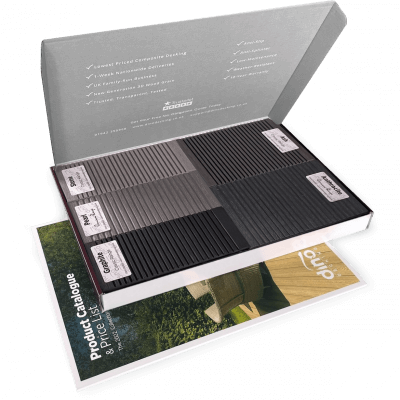
Our sample pack contains a sample piece of each colour currently available. Order your free sample pack today to compare the colours and get a true feeling of the Dino Decking range!
If you want to keep your outdoor areas looking shiny and new all through the year, you might be wondering
If you are looking to install any type of cladding, including composite cladding, it is important to think about how