
12 Unique Outdoor Living Ideas
You might love your garden, but are you really making the best use of it? Nobody uses their garden all
Products in Stock
Lowest Prices
Express Delivery
10-Year Warranty
March Sale. Up To 15% Off.
Having an outdoor space to spend time in can really enhance your life and your property. It’s great to have a space to relax, entertain or garden in, but some spaces – especially larger, open and undefined ones – can lack privacy and purpose. Garden partition ideas can help you to really make the most of your outdoor space. Creating different zones within the overall space can allow you to mark out distinct areas that each have their own purpose or vibe. An area of composite decking, for example, could be ideal for entertaining, while an adjacent walkway could lead to a magical flower garden.
Partitioning a garden can enhance privacy, provide shelter from the wind, and even add a sense of mystery as guests wonder what’s around the next corner! In this guide, we’ll provide a comprehensive list of garden partition ideas to help you learn how to section a garden like a professional.
Here are the 12 garden partition ideas to zone your garden:
6. Composite Trellis & Screens
Garden zoning is the practice of dividing a long or wide garden into distinct areas. It can be done in a number of different ways, using plants and natural products such as wood or bamboo, paths, edgings and structures such as screens, balustrades and pergolas.
Zoning your outdoor space can help maximise small gardens and increase the sense of purpose and functionality in larger ones. It can also be a great aesthetic choice.
Some of the key benefits of partitioning or zoning your garden include:
When thinking about how to divide a garden, you first have to consider how you will actually partition the different areas. ‘Soft’ partitioning uses natural or green dividers such as hedges or grasses, though they can also be combined with purpose-made structures. While these options offer a more organic, blended look, they tend to be a long-term commitment as they can require time to grow and establish themselves before providing full coverage.
Hedges and shrubs can provide perfect green options for natural dividers. Fast-growing laurel or boxwood can be an ideal choice for homeowners wanting dense, year-round privacy.
Ornamental grasses can add texture, height and movement to a garden. They can be an attractive choice and may be good if you feel hemmed in by more solid, heavier walls.
Fast-growing bamboo can be an ideal choice for achieving quick height and a contemporary tropical aesthetic.
Raised beds can add definition to your spaces by providing physical boundaries while doubling as a practical area for decorative planting or kitchen gardening.
Training the right plants, such as climbing roses, clematis or ivy, to grow up a trellis can create a stunning, vertical seasonal display, as well as making for beautiful dividers.
If you’re thinking about how to create garden rooms in your outdoor spaces, ‘hard’ landscaping techniques using purpose-built structures and materials can offer a practical yet stylish solution. These garden partition ideas provide immediate results without the waiting period associated with plants.
Trellis and garden screens offer instant privacy and a sleek, modern look. There are also plenty of functional benefits in choosing composite garden screens. Composite material is an eco-friendly and durable choice. It’s also rot and weather-resistant and very low maintenance as, unlike timber, it never requires painting or staining.
Glass panels can be an interesting choice for creating a secure, wind-breaking boundary that still maintains more of an open feel. They can also be perfect for garden sections such as pool areas or balconies where you want a secure barrier but don’t want to block the view.
Low brick or stone walls can provide a heavy, permanent barrier with a classic and traditional garden feel. Composite fencing can provide a lighter but sleek and attractive option if you want solid breaks between your garden sections.
Purpose-built structures such as pergolas and archways can be used to frame transitions between different ‘rooms’ or sections. They can be very attractive in their own right and can also add much-needed structural height to a flat garden.
There are also a number of affordable and accessible DIY solutions if you’re looking for cost-effective ways to zone your outdoor space. These could include the following…
Garden edging uses a border material to create clean lines, define spaces and separate different areas such as lawns, flower beds and paths in the garden. You can use specially made edging products that look like small fences, but you can also utilise simple materials such as logs, bricks or terracotta tiles to create subtle, low-level borders between different areas.
You could also try adopting a rustic approach by upcycling old pallets into vertical herb gardens or standalone screens to add character on a budget.
Installing a small fountain or pond doesn’t create a border, but it can provide a natural sensory barrier that defines a zone through sound and reflection.
There are a number of ways to make distinct ‘rooms’ in your garden, but every approach starts with careful planning. After deciding how you will mark out the room and the materials you will use, you should measure up and source all the materials you need, including any borders, plants and flooring.
Border materials or plants can establish the limits of the room or zone, but the floor can also have a big effect on the look or feel of the area. This could be gravel, grass or other materials and could also incorporate pathways. Composite decking can also be a great way of adding a practical and stylish new zone.
Certain structural dividers and floors will require a strong foundation or subframe to prevent sagging and instability over time. Composite decking, for example, will need a suitable composite decking frame to provide stability and support for the entire structure.
In many cases, the borders, flooring and plants will provide the main features of each zone, but garden rooms can often be anchored and enhanced by extra finishing touches such as solar lights or outdoor rugs.
Partitions such as modern composite screens and glass balustrades are specifically designed for straightforward DIY installation. It’s important to follow product instructions though and a step-by-step guide is very valuable. A sturdy subframe or foundation is also a must to ensure long-term stability.
Partitions or fences under 2 metres in height do not typically require planning permission. However, limits can be lower (typically 1 metre) for front gardens or conservation areas. You should always verify local building regulations before installing permanent structural dividers.
Some people prefer wood, but composite material offers superior resistance to mould, rot and moisture compared to traditional timber. Composite also needs significantly less maintenance, with no sanding, painting or staining required for outdoor use.
Tall composite trellis panels or decorative screens can be used to add height to existing boundaries without losing natural light. You could try creating a structural ‘roof’ over seating areas using a pergola or archway to block views from upstairs windows. Natural solutions including climbing plants, bamboo or fast-growing laurel hedges can be very effective for creating high-reaching privacy screens.
See-through partitions, such as open-weave trellis or slatted composite screens, can be used to define zones without making the space feel enclosed. Using partitions to make diagonal lines can also help create an optical illusion that makes a narrow garden appear wider.
These garden partition ideas can transform a sprawling or undefined garden into a private, multi-functional retreat. Whether you work in flower beds, wild zones to encourage nature, decks for relaxing and entertaining, or a winding pathway with surprises round every corner, learning how to divide a garden effectively can help you make the most of your outdoor spaces.
Composite decking and decorative garden screens can be a great way to create distinctive and practical zones in your garden. Take a look at Dino Decking’s full range of eco-friendly and affordable composite trellis and garden screens before you start your project.
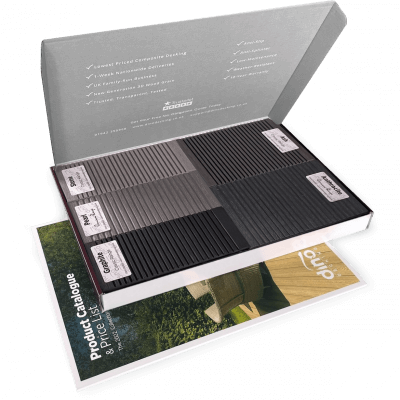
Our sample pack contains a sample piece of each colour currently available. Order your free sample pack today to compare the colours and get a true feeling of the Dino Decking range!
You might love your garden, but are you really making the best use of it? Nobody uses their garden all
Whether you’re building a fence from scratch or looking to retrofit new composite panels into existing infrastructure, you might need