
13 Spooky Halloween Outdoor Decoration Ideas
Summer is over, the leaves are turning and the air is a more chill. That means Halloween is here, and
Products in Stock
Lowest Prices
Express Delivery
10-Year Warranty
November Sale. Up To 15% Off.
With 5th November just around the corner, excitement is in the air, and everyone is gearing up for bonfires and fireworks. Keeping Bonfire Night safety in mind during the celebrations is crucial to prevent injuries and damage.
Key safety hazards include:
Authorities reported a 28.5% increase in firework-related hospitalisations from 2025 to 2026. These numbers highlight the non-negotiable importance of safety. In the UK, there are general rules that are key to Bonfire Night safety tips.
Fireworks are not permitted between 12pm and 7am. Doing so is a criminal offence, and the police can issue on-the-spot fines. If the case goes to court, offenders can receive up to six months’ prison time.
It is illegal for anyone under 18 years to buy, possess or set off fireworks. Anyone setting off fireworks in a public place must have a licence.
Let your neighbours know when you will be setting off fireworks. Although this courtesy is not written into law, it helps prevent complaints and gives them time to plan if pets are involved.
Bonfires must be at least 18 metres away from any structure, building or tree and may be no higher than three metres.
Disregarding these rules may cause serious damage and injury.
Fireworks are explosions of colour that capture young and old alike. A classic part of celebrations, they are always a highlight and spectacle. However, they can be dangerous and cause significant damage and injuries.
Fireworks must carry a mark identifying which safety standards they comply with.
The CE (Conformité Européenne) mark indicates that fireworks conform to European standards and is valid in Northern Ireland and Great Britain.
The UKCA (UK Conformity Assessed) mark means that the products were tested and approved in the UK and meet British safety requirements. This standard is recognised and accepted in England, Scotland and Wales.
The UK (old BS 7114) mark is no longer valid and accepted. This means that it is illegal to sell or use fireworks with this mark.
When buying fireworks, look for the UKCA or CE mark, which shows that a product has passed the required safety testing.
There are several firework categories:
In the UK, people may store a maximum of 5kg of F2 or F3 fireworks.
Fireworks must be stored in a safe way so that they do not spontaneously ignite. Keep them away from all flammable materials, open flames or sparks. Do not store them with petrol, oil, paint thinners or gas canisters or near heaters and boilers.
Store them in a cool, dry place in their original packaging. When damaged, fireworks can misfire when lit.
Ensure that fireworks are out of reach of children and pets.
Use a taper to ignite a firework and always light it at arm’s length. Never return to a firework once lit.
Light fireworks away from trees, sheds, fences and cables, observing the distances required. Ensure that there is an emergency shelter or wall nearby to shield a person in case the firework is faulty and does not shoot up.
The person lighting the fireworks should not be intoxicated.
Sparklers are handheld fireworks and are a fun way to involve kids on Bonfire Night. Despite their classification as a low-hazard F1 firework, they can still cause fires, severe burns and other injuries.
These fireworks can burn as hot as 2,000°C and should never be given to children under the age of five. A child must be old enough to understand instructions and the possible dangers of sparklers.
Supervise children when they play with sparklers. Because these types of fireworks burn so hot, they can cause life-changing injuries. Children lack spatial awareness, and their reactions are delayed should something go wrong. They may also drop hot sparklers, thinking they are extinguished.
Always hold sparklers at arm’s length and never close to your face or the face of someone else. Stray sparks or contact can cause corneal burns and lasting visual damage.
The arm’s length rule also helps to prevent loose clothing from catching fire and, if a child suddenly drops a firework, to prevent it from landing on them.
It is a good idea to wear flame-resistant gloves. This PPE provides a barrier between the hands and the extremely hot sparklers. They protect against falling sparks, prevent heat conduction and avoid accidental contact.
Sparklers remain very hot long after they have lost their “spark”. The metal core can still cause burns or fires, so it is crucial not to place it on a table or drop it on the ground. Fill a bucket with water or sand and ensure that children and grown-ups alike use it to dispose of their spent sparklers.
Follow these tips to ensure safe handling and use.
Few things compare to a large bonfire crackling away in the dark of night, casting a warm glow over everything. It is not only a beautiful thing to see, but it also brings communities together in celebration.
However, large fires are potentially dangerous, so it is important to put safety first and follow established rules and guidelines.
Firstly, choose the bonfire’s location carefully and ensure that the site is at least 18 metres away from any houses, sheds, fences and cables. Aside from starting fires, it can melt the insulation around cables and cause electrical explosions or power outages.
An unlit bonfire is a cosy nesting place for local wildlife such as hedgehogs, making it crucial to check the base of the construction before lighting it. Because isolated gardens prevent natural roaming, many fences have hedgehog highways to promote it. Special care should be taken when a bonfire is built near neighbourhoods with these fences. It is also a good idea to check the clothes of effigies for small animals.
Never use flammable accelerants, such as petrol, paraffin or lighter fluid, to light or revive a bonfire. These liquids vaporise rapidly and cause explosive flashbacks and flare-ups, which can result in severe injuries.
Keep an extinguishing kit, hosepipe or buckets of water nearby should the fire get out of hand. This will ensure that you have the resources to prevent the fire from spreading.
When the celebrations are over, ensure that the bonfire is properly extinguished, including all smouldering embers. The slightest spark can ignite dry bushes or twigs.
Bonfire Night is a stressful time for our pets. On average, their hearing is four times more sensitive than ours.
Loud bangs, such as those of fireworks, deliver acoustic shocks that are acutely distressing. Unlike thunderstorms, when animals sense atmospheric pressure changes, fireworks are unpredictable and sudden. Plus, animals pick up vibrations through their paw pads and bodies, which activate the genetically coded fight-or-flight responses.
For these reasons, pet owners must take special precautions on Bonfire Night.
Take pets for their routine walks and keep them indoors well before dark. This way, they will already be sheltered and not exposed to early fireworks, which will cause them to panic, bolt or suffer extreme distress. Walking a dog after dark increases the chances of unknowingly leading them into an active celebration.
Create a den with familiar bedding and toys. Crates, filled with scents and items they know, leverage their natural denning instinct and help them feel safe. Cover this “den” to muffle the loud noises.
Ensure that pets are microchipped in case they run off. As stated, loud bangs trigger an animal’s hardwired fight-or-flight response. Some will break through fences and even windows trying to flee from the noise, which they perceive as danger. Collars and identity tags can snap off, but microchips underneath the skin cannot. Pets that are chipped can be reunited with their owners much quicker.
Safety is crucial when handling fireworks and other incendiary devices. Ensure that you follow the legal guidelines and safety tips to avoid serious incidents.
Be mindful of when and where you set off fireworks and construct your bonfire to limit the risks of unintended fires, explosions and injuries.
Take care of pets and implement the necessary measures to keep them calm and safe.
Just imagine how spectacular it would be to view the colourful display of Bonfire Night fireworks from a brand-new composite deck, complemented by striking composite fencing. Contact us today to discover how our extensive range of options can transform your garden.
When celebrating Bonfire Night in the UK, there are a few standard laws and guidelines that must be followed.
Firstly, no one is allowed to set off fireworks between 12pm and 7am. This means that your celebrations must wrap up by midnight. Breaking these curfews can result in fines and further legal action.
Secondly, it is against the law for anyone under the age of 18 to buy, possess or use category F2 and F3 fireworks in a public space. Ensure that you buy your fireworks from registered, licensed retailers and that all products carry a CE or UKCA mark, which shows they have been safety tested and approved.
Thirdly, you need a licence to set off fireworks, even sparklers, in any public place. Doing so without a licence is against the law, so it’s best to keep celebrations to your own back garden.
Fourthly, there are very specific criteria for how to set a bonfire. You must build bonfires well clear (ideally 18 metres) away from any structure, trees, cars or cables. Bonfire sizes must be manageable, and no construction should be higher than three metres. You may only burn clean, dry timber. You are not allowed to accelerate the fire with any flammable liquid, including petrol, paraffin or lighter fluid. Check for wildlife in the area, such as the base, before lighting the pyre.
Yes, anyone can start a bonfire on private property on Bonfire Night, provided that they follow the laws stated by the government around bonfire creation. Bonfires must not be a nuisance or pose a danger to any person or wildlife in the surrounding area.
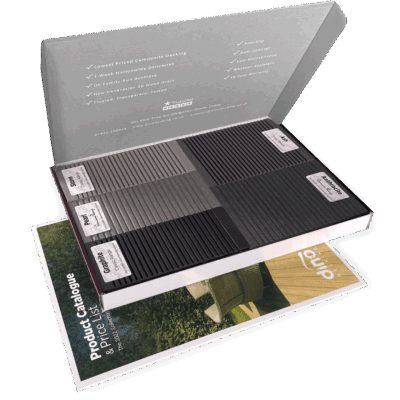
Our sample pack contains a sample piece of each colour currently available. Order your free sample pack today to compare the colours and get a true feeling of the Dino Decking range!
Summer is over, the leaves are turning and the air is a more chill. That means Halloween is here, and

Looking for porch cladding ideas to give your front porch a makeover? If so, you’ve come to the right place!