So, you’ve discovered that there is a bees nest under your
decking and you’re wondering what steps to take to remove the bees safely? While it may seem like a daunting and potentially stressful task, there are some clear steps to take in that situation.
Stay calm and follow the below advice to keep yourself and your family safe from bee stings while keeping in mind the creatures’ welfare. Find out how to identify the species, how to get rid of a bees nest in your garden, who can help you with the removal, and how to prevent a repeat issue.
Article Contents
How to Identify Pests Living Under Your Deckiing
Once you’ve found yourself visited or invaded by buzzing creatures, you’ll want to identify the species you’re dealing with since advice on how to handle them will vary. Establish whether you’re just being visited as a source for food or pollination or if the insects have nested under your decking.
Bees are not pests; they are incredibly important for the environment and considered an endangered species. Consequently, you cannot have pest control get rid of bees in your garden for you.
You can distinguish between bumblebees, honeybees and wasps by looking at their appearance and identifying some characteristics. Keep a safe distance while you do so – there’s no need to get up close to be able to tell!
Bumblebees
Bumblebees are known for their furry, round body that is large compared to a honeybee. They live in small colonies and prefer dark, sheltered spots for nesting. The space under your decking offers the perfect conditions for them, but there is no need to panic since bumblebees live in small colonies and don’t display any aggressive behaviour.
The best way to handle a bees nest in your garden is to leave them be. They have a short life cycle and the nest will die off once the summer is over.
Honeybees
Honeybees can be identified by their slender build and their typical gold and brown or black fuzzy stripes. They prefer building their hive in enclosed and dark spaces and, depending on the layout of your deck, are less likely than bumblebees to live under it since they don’t build their nests too close to the ground. However, hollow posts, joists or skirting boards can be attractive locations to honeybees.
As a general rule, honeybees are not aggressive towards humans, but they are very defensive when there is a perceived threat, especially if it is close to their hive. Additionally, they live in large colonies, which increases your chances of being attacked by multiple bees or a whole swarm. While a single bee sting is unpleasant but harmless to those who aren’t allergic, a bee attack can be dangerous and cause serious harm.
If you have a bees nest under your decking or around your house, contact the
British Beekeepers Association (BBKA). They can advise you or organise a swarm collection.
Wasps
Wasps, on the other hand, are a pest and can be highly aggressive in their behaviour, especially near their nests. They are easy to identify as they are bright yellow and black and hairless. As they live in large swarms and frequently build nests under decking, the risk of harm can be high.
While DIY options for wasp nest removal are available, it is strongly recommended to contact pest control. The space under your decking is hard to reach and over-the-counter solutions often can’t handle a fully developed wasp colony. Contact pest control instead to avoid you or your family being attacked by them.
| Insect |
Appearance |
Colony Size & Behaviour |
Action Required |
| Bumblebee |
Large, furry, round body |
Small (50-150); non-aggressive |
Leave alone (nest dies off in the autumn) |
| Honeybee |
Slender, golden-brown/black |
Large (thousands); swarming |
Contact BBKA (British Beekeepers Association) |
| Wasp |
Bright yellow & black, hairless |
Large; highly aggressive near nest |
Contact professional pest control |
What to Do if You find a Bees Nest Under Your Decking
Do Not Panic
Once you’ve established that you indeed do have a bees nest under your porch, the most important thing is to not panic. The risk of damage to your decking is very low and as long as the bees are not disturbed, they are unlikely to cause any harm. Children and pets will be equally safe as long as they are supervised to make sure that they aren’t interfering with the bees.
Do Not Disturb or Block Entrances
It might seem like a good idea to seal holes that the bees use as an entry and exit point, but it’s not recommended to do so. Cutting off their main entrance will result in the insects looking for other ways out and you will risk them getting into your home through small gaps. If they feel trapped or under attack, it can also set off their defence mechanisms, which will increase your chances of getting stung significantly.
Short Nest Life Cycle
If you have identified the nesting creatures as bumblebees, the recommended course of action is to wait out their short life cycle. They won’t be around for longer than three or four months and will die off in late summer or early autumn. Leave them alone and the issue will sort itself out.
As they are not aggressive, they pose very little risk to people or pets. Take extra care, however, with small children or people with allergies.
Reroute Bee Flight Paths
To manage the already low risk of stinging, you can reroute the bees’ flight paths. Place potted plants or decorative screens in strategic spots near the edge of your decking. This is an easy method to make seating areas, frequently used walkways or play areas less attractive to the bees.
It’s a good way to keep your garden safe without sacrificing its aesthetic.
Can Bees Nests Be Removed From Decking
Yes, depending on the type of bee, a bees nest under your porch can be removed. How to go about it depends on the exact species you’ve discovered nesting under your deck:
- Honybees – reach out to a local beekeeper for advice and to discuss if a swarm removal is possible.
- Bumblebees – leave alone and wait out their naturally short life cycle. There is no advantage to a removal as they are not aggressive.
Since bees are not classed as pests, they cannot be removed or killed by pest control. However, if you have wasps nesting under your deck, an exterminator can treat the nest and remove it for you.
Always make sure to close any gaps and entrance points to avoid a repeat issue.
Can You Clean or Maintain Your Decking With a Bees Nest Present?
Yes, you can continue to
clean and maintain your decking with a bees nest present if you stick to a few simple restrictions:
- Avoid pressure washers as their noise and vibration can agitate the bee swarm or flood the sub-decking space they are nesting in.
- Don’t use any harsh chemicals or bleach cleaners as they are harmful for pollinators as well as decking materials.
- Do your deep cleaning and bigger maintenance tasks once the nest has been abandoned or removed. Staining and any work on the subframe can wait until late autumn to winter-proof your deck.
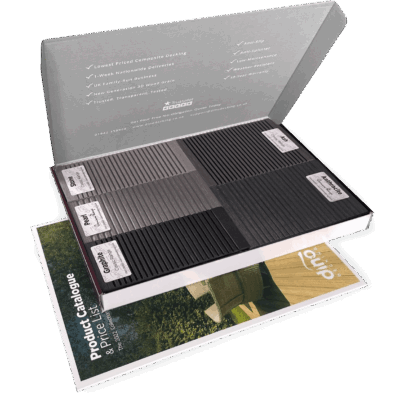
Cut down on maintenance by opting for materials with few upkeep requirements. Composite decking is designed to be durable while requiring very little work.
Explore our full range of
composite decking to transform your garden into a functional and cosy space!
Benefit from the range of products – whether you want modern flush cladding or prefer the classic aesthetic of slatted composite panels, we can help you out. We also offer different shades to choose from, whether you prefer darker or lighter shades for your outdoor space.
Easy to maintain and durable, composite cladding is a popular option. On top of that, we offer a
10-year warranty.
FAQs