

5 Porch Cladding Ideas to Upgrade Your Home
Looking for porch cladding ideas to give your front porch a makeover? If so, you’ve come to the right place!
Products in Stock
Lowest Prices
Express Delivery
10-Year Warranty
October Sale. Up To 15% Off.
Do rats live under decking? The answer is that yes, they can live under decking. Rats are common animals in urban and rural settings alike. They tend to avoid humans where possible, but will occasionally try to set up home in garden spaces, including underneath sheds, in accessible compost bins and underneath decking.
It’s worth noting that composite decking has a number of benefits over traditional timber decking when it comes to preventing rats. It is more durable and resistant to weather, rot and warping, which might mean that rats have fewer places to get in and out. Composite decking itself does not attract rats, but they can use the space underneath as a shelter, from which they leave to seek food.
So, how do you actually prevent rats under your decking, and what are the signs that you are suffering from unwanted guests? Read on to find out.
Does decking attract rats? Not by itself, but it could provide a convenient shelter if they are attracted to your garden by other things, which could include the following:
Home composting is a great way to reduce waste and improve your soil quality and plant growth. It’s beneficial and environmentally friendly, but it can attract rats, which are attracted to compost bins both as a food source and a source of warmth and shelter. Open bins and compost heaps are far more accessible than closed compost bins.
You can discourage rats by placing the compost bin in a more open space, as rats do not like to be exposed for long. You can place the compost bins as far from the house and decking as possible so that if they do take an interest, they are less likely to take up residence under the decking. You can also use physical barriers such as chicken wire to prevent rats from getting into the bin and the compost itself.
Dropped food from social gatherings, children’s parties and other events can attract unwanted guests. You should ensure that the decking and garden area, in general, are cleaned after any gatherings or after an al fresco lunch. You should also make sure that human and pet food stores in the kitchen or any outhouses are sealed and preferably locked away.
If you like to put out food for other visitors, such as birds and squirrels, you should be aware that this could attract guests that are a lot less welcome. Using bird feeders can reduce the amount of feed scattered on the floor, but you might still receive unwanted guests.
Harsh weather conditions can sometimes cause rats to seek out shelter, and decking can provide them with the perfect place to stay warm and dry, especially during the cold and wet winter months. Ensure you put up necessary defences such as chicken wire to block rats from finding refuge, especially if you have raised decking.

You might spot rats if they are moving from your decking to food sources or elsewhere. They do tend to keep a low profile, though, so you might only see signs that these rodents are about.
Some signs of rats under your decking include the following:
A common sign of rats under decking is rat droppings. Rat droppings are usually shiny, dark brown or black. They are soft and moist when they are fresh, but they become hard and crumbly as time passes. They are usually about 1-2cm long. This is much bigger than mouse droppings, which are closer to the size of grains of rice.
To safely dispose of rat droppings, you should wear gloves and ideally a mask. Spray with disinfectant and pick up the droppings with a paper towel. Seal it in a plastic bag before disposing of it in the bin, and then disinfect the area again.
Like all rodents, rats constantly gnaw because their teeth never stop growing. Chewing or gnawing on hard surfaces such as wood can help wear down their teeth, and this can leave distinctive marks. They also tend to establish and follow familiar routes, and this can leave ‘rub marks’ against surfaces. When rats and decking come together, you may see some of these physical signs. However, it’s worth remembering that one of composite decking’s benefits is that it is tougher and more durable than timber, meaning that it will be more scratch-resistant.
Rats don’t need much of an entrance, but even if your decking is properly sealed, they may still be able to get in by digging a burrow from the garden. Rat burrows tend to have holes around 6-9cm in diameter. There may be well-trodden tracks or runways leading to and from the hole.
If you do discover rat burrows in your garden, it is usually best to call a professional to deal with the problem as they may have taken up residence.
Rats will shred anything they can find to make a nest, so you might find a bundle of various materials such as fabric, cardboard, plants and whatever else they’ve managed to get hold of. Rat nests are generally in out-of-the-way places, and again, they should be dealt with by a professional.
Make sure to clear leaves, debris, and organic matter from underneath the decking regularly. These are the perfect nesting materials for rats, so clearing them makes the space less appealing.
Identifying rodent visitors is important, but even more crucial is how to stop rats from nesting under your decking. Here are some things you can do.
A rat’s main objective is to find food. Making sure that they have no easy and regular access to food is the single most important thing you can do to stop casual visitors becoming residents. Clearing away food straight away is the best chance of preventing rats from exploring your garden, but you should also make sure that there is no access to human or pet food from outside spaces.
Keeping your garden and decking clean will get rid of detritus that could prove edible to rats even if you don’t think of it as appetising food. Composite decking cleaner can keep your decking spick and span, and you can also check out our guide on how to clean composite decking. Rats also like to stay out of sight, so keeping bushes trimmed and the lawn mown can reduce overgrown areas where rats could hide.

Unlike mice, which can get enough water from their food, rats need a regular source of water. Uneven decking can lead to a buildup of water, which could attract rats. Ideally, your decking should have a slight incline to allow water to run off. Any uneven areas prone to water buildup should be rectified so that the water runs away. This should be done to prevent rats and as part of regular decking maintenance.
You can use materials such as wire mesh to create a rat barrier which prevents access under your decking. A rat barrier won’t be right for every garden and decking set-up, but it could be a possible option. Continuous composite fencing can also sometimes prevent rats from gaining access to your garden in the first place.
Your best bet for decking that doesn’t attract rats is composite. Made from a blend of recycled plastic and wood fibres, composite is a lot more durable than wood, making it more difficult for rats to gnaw through.
PVC decking is made entirely out of plastic, making it less environmentally friendly but still fairly durable. The main benefit is that plastic isn’t too tempting when it comes to rats looking for something to gnaw on, so it should do well to prevent them.
While we wouldn’t usually recommend wooden decking to prevent rats, hardwoods can be a good option. Being much harder means that rats have a tougher time getting through them. Plus, they can last much longer than softer woods.
When it comes to decking and rats, rodents will sometimes try to set up home underneath, but this is not a common problem, and you can discourage rats by taking the above steps.
If you want clean, durable decking that is resistant to both the weather and pests, our composite decking and decking balustrade railings are just the ticket. They also come in a wide range of colours and configurations, making them perfect for any garden and decking design.
Order your free composite decking samples for more inspiration or get in touch for assistance from our friendly and experienced team.
Wooden decking attracts rats more than composite. While neither material inherently attracts rats, rats will gnaw on timber boards because they provide an actual food source for rodents. The main benefit of choosing composite decking over wood is that it is less inviting for rats to chew on and much more durable.
To keep rats away from your decking, you can use a wide variety of natural repellents. Rats have a keen sense of smell, so it is best to use strong-scented deterrents such as peppermint oil, eucalyptus oil, and white vinegar. Simply soak cotton balls in these liquids and place them around the perimeter or underneath the boards.
Yes, having rats living under the decking does pose a health risk for pets. Rats carry diseases that can easily be spread to both humans and other animals. We recommend keeping cats, dogs and other animals away from the infested area and seeking professional help if needed.
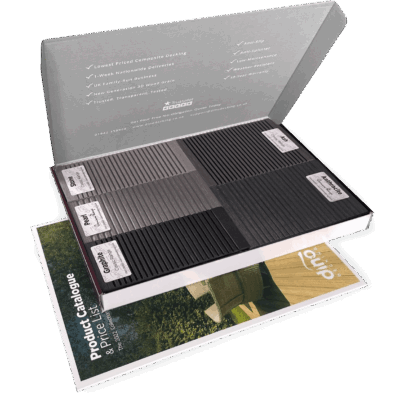
Our sample pack contains a sample piece of each colour currently available. Order your free sample pack today to compare the colours and get a true feeling of the Dino Decking range!
Looking for porch cladding ideas to give your front porch a makeover? If so, you’ve come to the right place!
So, you’ve discovered that there is a bees nest under your decking and you’re wondering what steps to take to