

5 Porch Cladding Ideas to Upgrade Your Home
Looking for porch cladding ideas to give your front porch a makeover? If so, you’ve come to the right place!
Products in Stock
Lowest Prices
Express Delivery
10-Year Warranty
October Sale. Up To 15% Off.
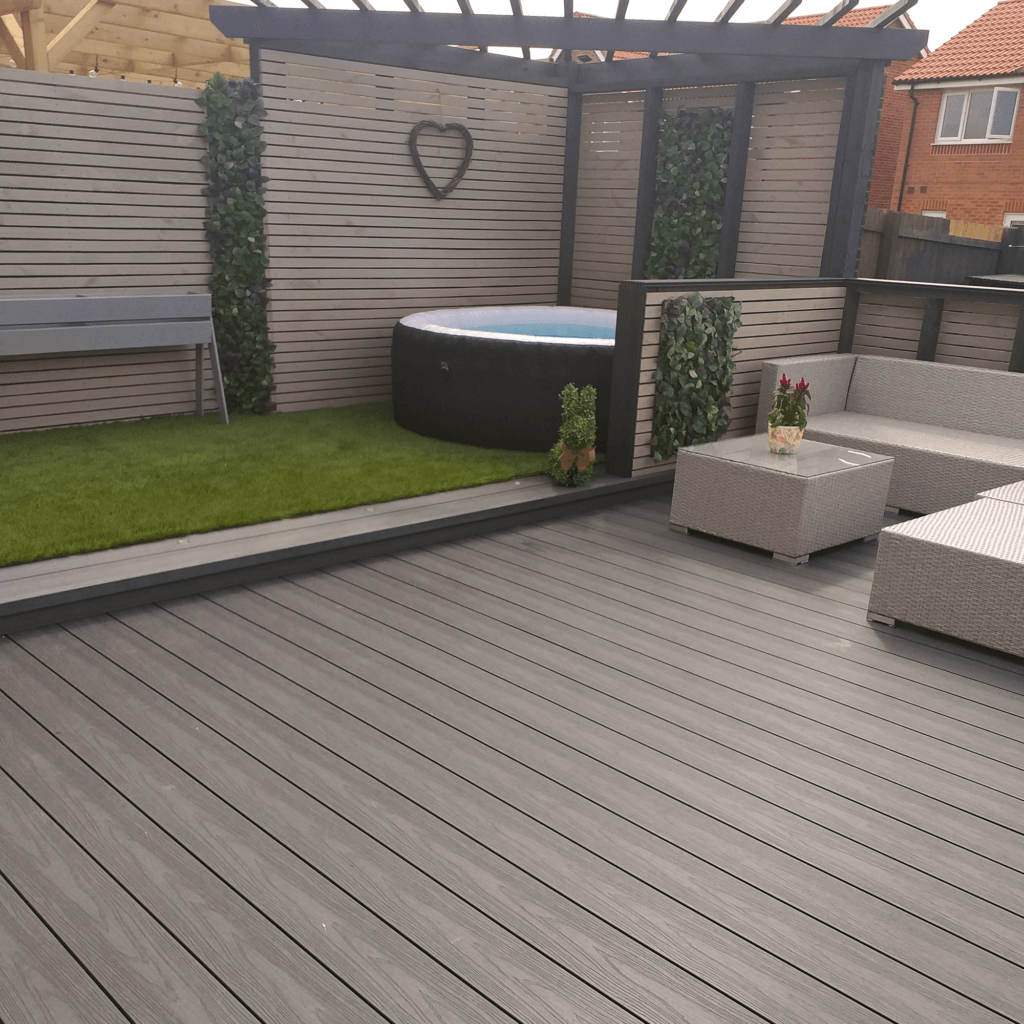
Does composite decking scratch? Composite decking is highly scratch resistant – however, with kids and pets running around your deck, and furniture being dragged across it, scratching is bound to happen.
Naturally, you would like to keep your new patio looking great, day after day, year after year. The good news is that scratches can be prevented and treated!
Let’s take a closer look at the issue of scratching and how it can be managed.
So, it’s not 100% scratch-proof, but does composite decking scratch easily? No! It’s highly scratch resistant and does not scratch easily.
In a composite vs wood decking stand-off, composite decking walks away with first prize without breaking a sweat. Timber decks scratch easily and need constant maintenance. Composite decking is extremely durable and low maintenance.
At Dino Decking, everything from cladding to fencing and balustrades comes with a 10-year warranty. This means long-lasting composite decking that doesn’t warp or stain and looks stunning for much longer than wooden decks.
Our capped composite decking takes scratch resistance to the next level. We’ve expertly coated our robust composite products with an extra polymer sleeve that makes them extra tough and more scratch resistant.
Part of the family, our furry friends are often out and about in the garden and on our decks. Composite decking is an excellent choice when you have pets because it doesn’t splinter or soak up accidents. Their claws can, however, leave scratch marks, but there are ways to prevent or limit this.
Outdoor rugs prevent direct paw-to-deck contact and help keep your surfaces scratch-free. Capped composite decking is a must because it has that extra polymer layer that shields against damage – not just scratches, but also stains and odours.
Dragging heavy furniture, or any other heavy item for that matter, across your decking can scratch and mark it.
Attaching rubber pads to the legs or bottoms of outdoor chairs, sofas and tables works like a buffer and limits scratching. Plus, it makes moving them easier. Adopt the habit of lifting rather than dragging furniture and other objects such as boxes.
These simple measures help to protect your surfaces.
Small stones or grit often stick to or get wedged in the soles of our shoes. When walking across a surface, our shoes act as sandpaper, scratching and marking it. High heels with pointy ends are especially damaging.
Get into the habit of removing your shoes before stepping onto the deck to address this particular scratch risk.
It’s important to choose the right tools to clean your composite deck. Go for plastic instead of metal, and use soft brushes to clean your deck. Plus, when washing your decks with a pressure washer, remember to use it on a lower setting to avoid full-blast damage.
Pop in and browse our extensive collection of everything composite. We are your one-stop solution for composite decking, cladding, fencing, screens, balustrades, substructures and accessories!
All our products are manufactured to the highest standards with recycled woods and plastics, and they come in a wide range of stunning colours. If your deck is a high-traffic, pet-friendly zone, we confidently recommend our Premium Capped Composite Decking Boards, which have an added layer of toughness against wear and tear.
Choose Dino’s composite solutions for low-maintenance, long-lasting decks that stand up to harsh weather and scratch-causing elements.
We’re standing by for all your composite decking needs. Get in touch today to transform your garden into a second living space!
Dog claws, especially those of bigger breeds, can scratch composite decking. Although it’s extremely hardy and scratch-resistant, it’s not completely scratch-proof. This means that you’ll have to take some precautions to prevent your pets from marking your deck.
Simple, yet effective, outdoor rugs create a barrier between your deck and the claws of your pets. Not only practical, they also look great and enhance the aesthetic appeal of your exterior spaces. You can use outdoor rugs to tie together planters, furniture and other decor, for example.
Yes, you can sand scratches out of composite decking. However, it’s not advisable to sand down capped boards.
Our top-of-the-line Premium Capped Composite Decking Boards, with their robust polymer coating, resist scratches and stains. Sanding them may damage this protective layer.
You can, however, sand our durable and slip-resistant Classic Composite Decking Boards. Use fine-grit sanding paper to buff them.
This depends on the quality of your composite decking.
Specifically designed for slight weathering, minor scuffs and scratches fade into the texture of Dino Decking’s composite decking boards. Slight weathering refers to the natural, but controlled, colour change of a product after installation.
We place the highest premium on quality manufacturing because it is possible for scratches and marks to show up more when decking fades, especially in darker colours. That’s why we also recommend our premium capped boards for their excellent weather and scratch resistance.
Capped composite decking is by far the most scratch resistant. Remember, uncapped boards do not have a protective layer, whereas capped ones do.
Dino Decking’s Premium Capped Composite Decking Boards are covered with a polymer sleeve. This layer of protection shields the inner wood-and-plastic core against damage, and gives it superior resistance to scratches, scuffs, stains, mould, moisture and fading.
In short, these decking boards are built to last and come with a prime 10-year warranty.
It’s fine to buff classic composite decking boards, but do not sand capped products.
To remove scratches from uncapped composite decking, clear the area and sand the scratch using fine-grade sanding paper. Apply filler in a thin, even layer and sand it flush to the decking boards. Remember to wipe away any excess. After the filler has dried, give it a finishing buff.
As the UK’s leading supplier of composite decking, we have everything you need to keep your deck shipshape. Check out our incredible and top-quality solutions and accessories.
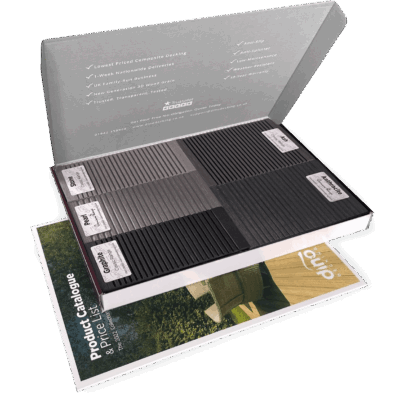
Our sample pack contains a sample piece of each colour currently available. Order your free sample pack today to compare the colours and get a true feeling of the Dino Decking range!
Looking for porch cladding ideas to give your front porch a makeover? If so, you’ve come to the right place!
So, you’ve discovered that there is a bees nest under your decking and you’re wondering what steps to take to