

5 Porch Cladding Ideas to Upgrade Your Home
Looking for porch cladding ideas to give your front porch a makeover? If so, you’ve come to the right place!
Products in Stock
Lowest Prices
Express Delivery
10-Year Warranty
October Sale. Up To 15% Off.
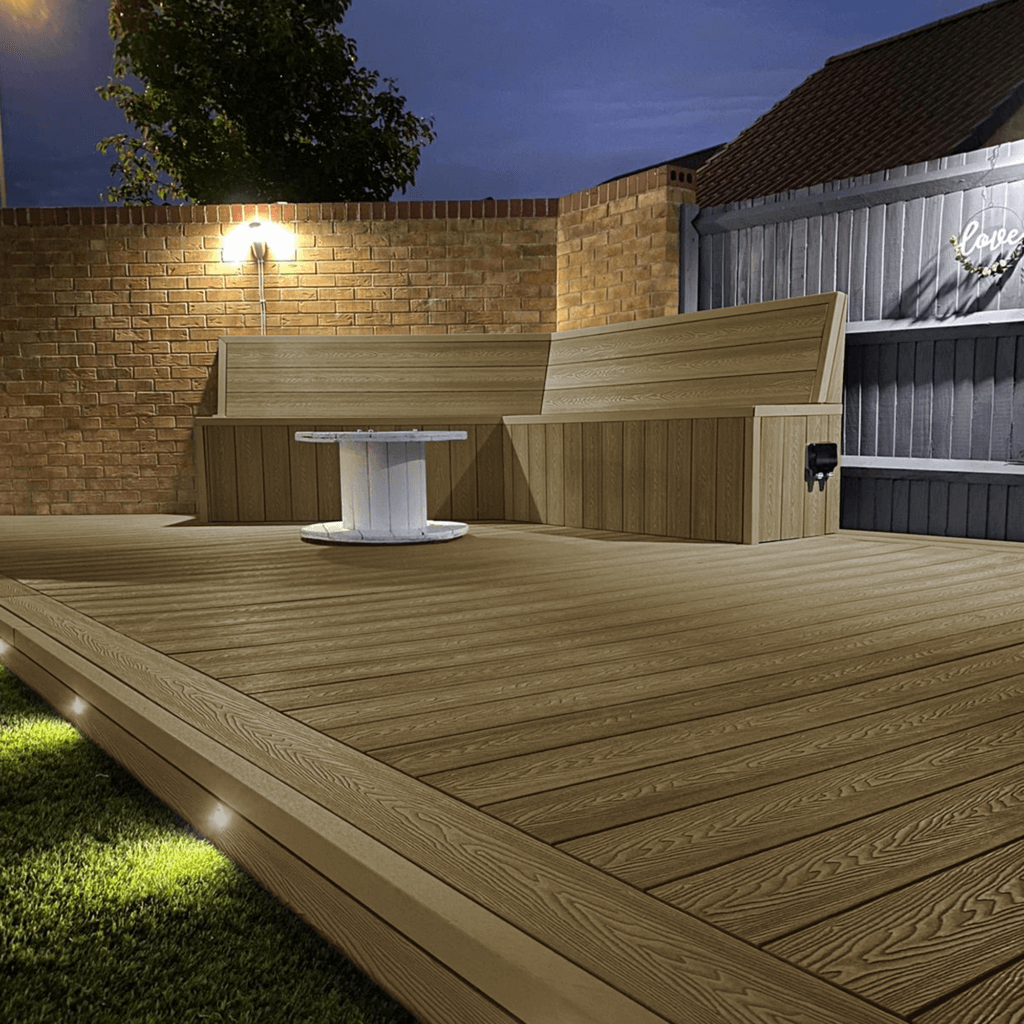
Wondering how to finish the ends of your composite decking and give it the edge that takes it to the next level? In this guide, we address the A to Zs of the finer details and show you how to fully finish your deck to perfection.
Structurally and aesthetically, it’s important to round off the ends of composite decking. It strengthens the entire framework and looks both professional and stunning.
Below, we walk you through the different finishing solutions, including their pros and cons, so that you can choose what best suits you and your deck. Remember, we’re here for any questions and concerns, so don’t hesitate to contact us!
Picture frame boarding, or picture framing, refers to bordering (or framing) the perimeter with decking boards. It’s aesthetically appealing and also provides a visible border that helps prevent trips. However, it can be slippery, which is a concern in the UK with its unpredictable wet-weather conditions.
Compared to other deck-end finishes, picture frame boarding is more expensive and labour intensive. You must:
These frames run perpendicular to or along the edge of the main structure, and the slats or panels are often rotated to create contrasts and emphasise the ends.
Composite facia boards are highly durable and weather-resistant ends that beautifully round off your decking. They fortify your deck while closing it off to help limit the entry of water that causes rot and structural weaknesses. Supremely low maintenance and durable, composite fascia boards are a versatile and comprehensive finishing solution.
Using non-slip decking and fascia boards reduces the risk of slips and falls, and is especially recommended in the UK, with its rainy climate. Composite fascia boards are lightweight and easy to install:
Composite edge trims are nifty L-shaped fixtures that hug edges and corners to create a clean, seamless finish. Made from the same material as our composite decking boards, they’re durable and weather resistant, so they are a cost-effective decking solution in the long run.
Thanks to our slip-resistant materials, these finishes reduce safety risks, especially in wet weather. To install composite edge and corner trims, simply:
Bullnose edges are special finishing decking boards with smooth, rounded edges. They’re great for steps and stairs. Covering sharp edges, they also reduce trip hazards, and, because they’re made with the same hardy non-slip material as our composite decking, our bullnose edges are a safe choice.
Initial installation costs might be pricey, but thanks to the supreme durability and low maintenance, it’s the cost-savvy choice in the long term. It’s a cinch to install these lightweight composite bullnose edges:
End caps and plugs give your deck that final finish by concealing hollow ends and other exposed areas. Made from non-slip material, they curb the risks of slipping and falling. By sealing open areas, these nifty fixings help to prevent water ingress and issues such as warping.
Our end caps and plugs are low maintenance and ideal for hollow boards. Thanks to their push-fit design, they are quick and easy to install:
There are a few important things to keep in mind when finishing the ends of your composite decking:
Explore our composite decking solutions.
From decking panels to fascia boards and trims, Dino Decking is your one-stop solution for all your composite decking requirements. Eco-friendly, all our products are made from premium recycled materials that are ultra-durable and weather resistant, making them the ideal outdoor, lasting solution for UK conditions.
Our finishing trims help to improve slip resistance in wet conditions while boosting the structural integrity and strength of your deck. These fixings deliver maximum protection and take the aesthetics of your deck to the next level.
Contact us to make your dream deck a reality!
No, you don’t have to seal the cut ends of our composite decking. Unlike timber, these panels and trims are highly water resistant, which means that they do not absorb water like their wooden counterparts. Consequently, composite decking does not swell, rot or warp, making it the perfect go-to for outdoor constructions in the UK.
Extremely durable and long lasting, it’s one of the greatest benefits of composite decking.
Use our composite accessories, fascia boards, bullnose edges and end caps to hide the hollow ends of composite decking. These are specifically designed to round off installations, cover sharp edges, and ‘fill in the gaps’. Our push-fit end caps, for example, are perfect for covering hollow ends.
These accessories come in different colours that complement our composite decking boards. You can install matching tones or vary colours for contrast and effect. Regardless of your choice, the results are seamless, professional and stunning.
It’s not advisable to stain the ends of composite decking. Although there are special paints and coatings, these panels and trims already feature a protective layer, which makes staining redundant.
All our products come with a 10-year warranty, which assures you of our commitment to outstanding quality. This includes all decking, fencing, balustrades, cladding, screens and substructures. Our tough, water-resistant Dino Shield adds an extra layer of long-lasting endurance.
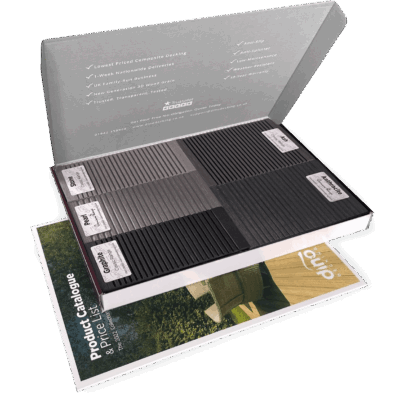
Our sample pack contains a sample piece of each colour currently available. Order your free sample pack today to compare the colours and get a true feeling of the Dino Decking range!
Looking for porch cladding ideas to give your front porch a makeover? If so, you’ve come to the right place!
So, you’ve discovered that there is a bees nest under your decking and you’re wondering what steps to take to